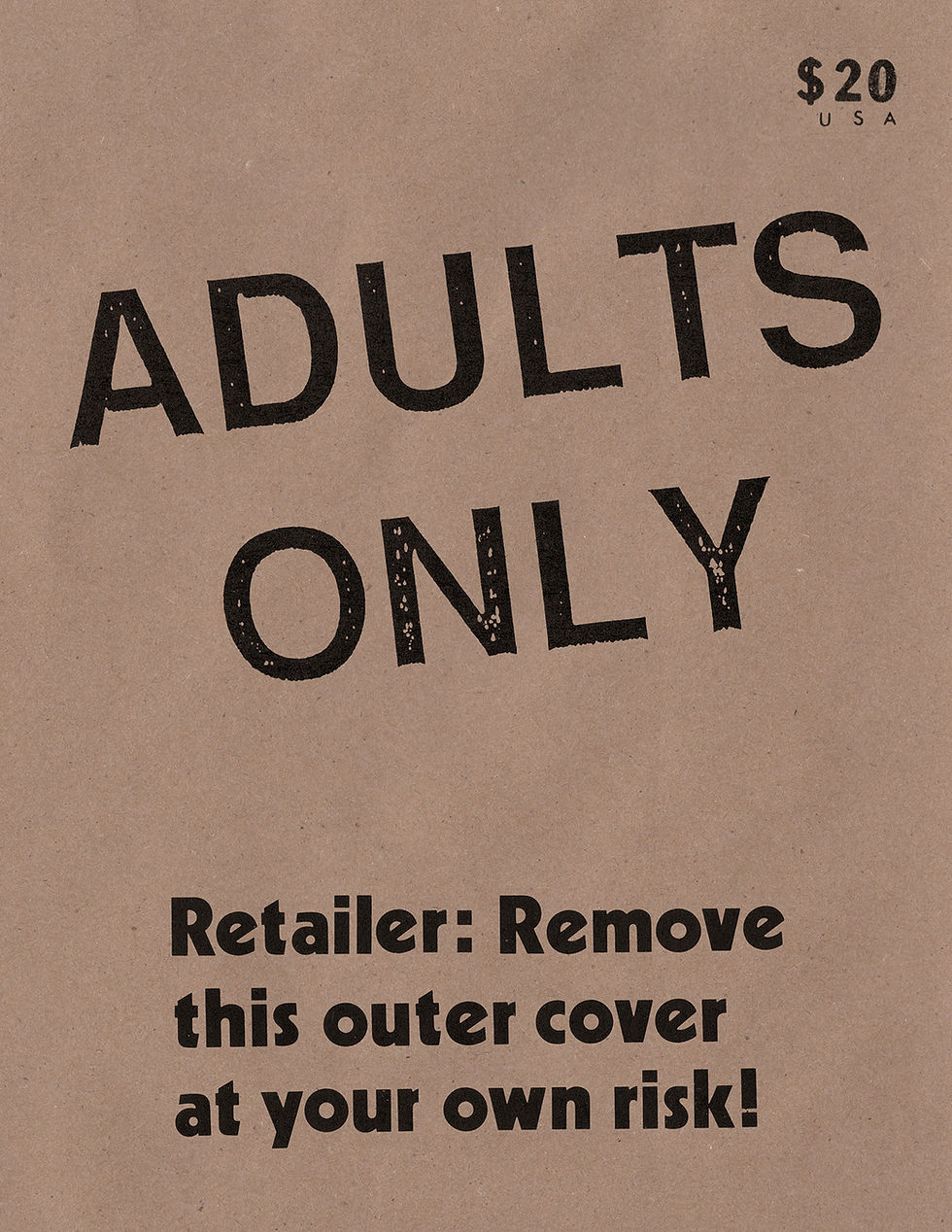
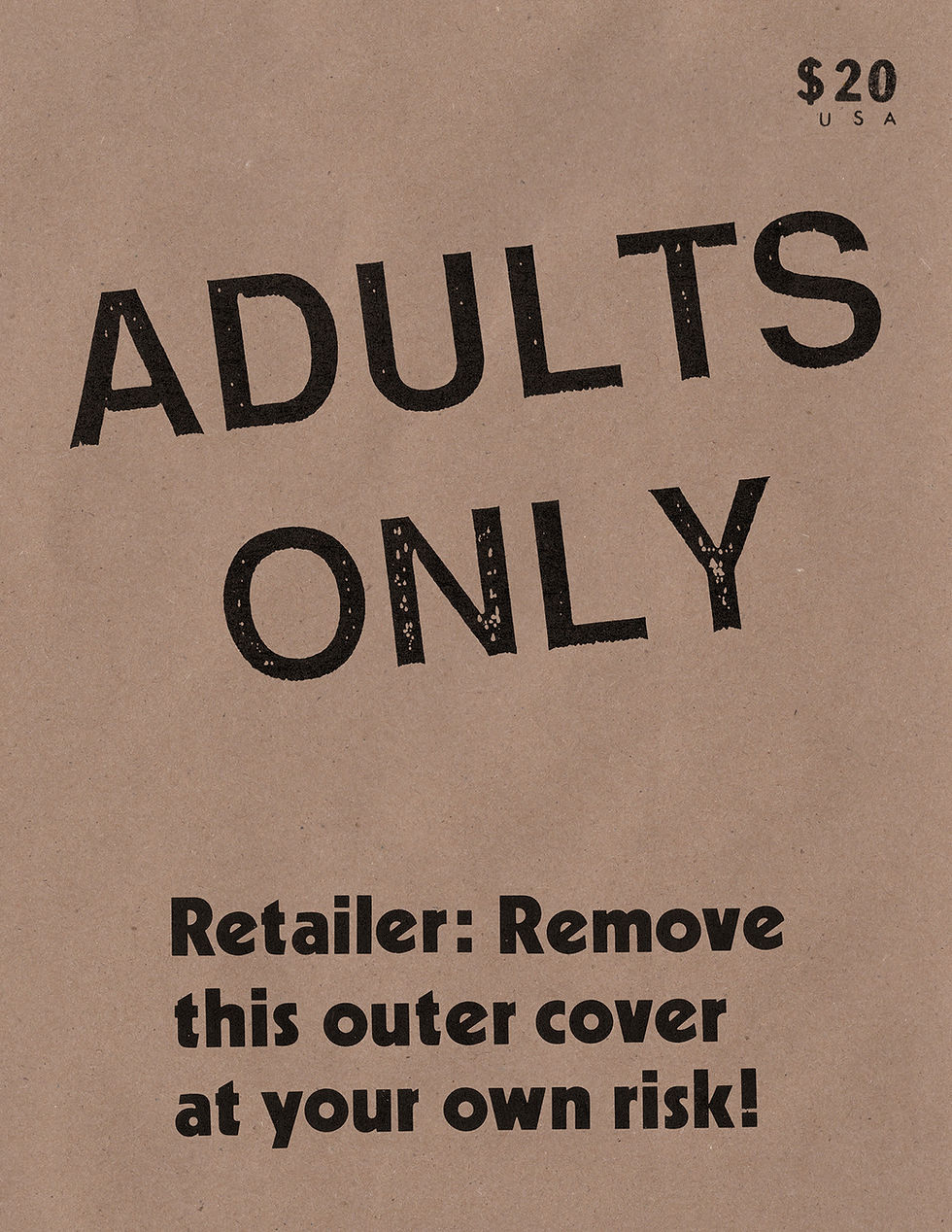
Jasen Lex and I made a zine. It doesn’t have a fancy-pants name or even a cover (I tore those off).

Over the last year, I’ve been inspired by:
- Jason Karns – a cartoonist who makes some of the best designed/produced comics I’ve seen in a long time using an inkjet printer (here’s a link to a Comics Journal interview with Karns)
- Tom K.’s Uncivilized Books and workspace – a cartoonist/publisher who started out publishing beautiful mini-comics using simple office hardware like a black and white laser printer (photo below from Dustin Harbin’s flickr stream)

- Ryan Cecil Smith’s limited edition 3-part mini-comic series, SF Supplementary File #2 – a hand-drawn, hand-written reproduction from Matsumoto Leiji’s 1979 science fiction manga series Queen Emeraldas (risograph-printed in color & hand-assembled) as well as his beautifully designed and printed stationary and invoice (talk about attention to detail)
- John Pham’s stunning Scuzzi – 2-color risograph printed ode to 1970s and 80s computer imagery and advertising
- a trip to Family (where I found the aforementioned Scuzzi)
- and talking zines, printing, and publishing on our show with Koyama Press’ Anne Koyama, Drippy Bone Books’ Keenan Marshall Keller, Encyclopedia Destructica’s Jasdeep Khaira, and Ker-Bloom’s Art Noose
All of these things fueled my interest in making a new zine, and after kicking around ideas and talking shit with Lex, we decided to put together a collection of comic book ads. The ads are from the 1940s – 2000s, and the idea developed from Jasen Lex’s isolated comic book panel Tumblr and my interest in advertising. Before long, we settled on a format – 32 pages, saddle-stitched, 6 5/8 x 10 1/4, same as a comic book.
It seems like many of the comic book stores and conventions I visit are dumping their back issues. I prefer the original comics to collections because I like the format as well as the extra content that usually does not get reproduced (mainly advetisements and text pages). Many of the ads were produced by comic book artists, yet when I think of cartoonists like Todd McFarlane, Jack Kirby, Jack Davis, C.C. Beck, Neal Adams, Charles Burns, I often overlook this part of their body of work. I also find the politically-correct tone changes through the decades fascinating – one cast member of a Tootsie Roll ad series from the 40s was named Fatso and another ad shows a family shooting a BB gun indoors! With all that in mind, here is how we made this zine.
1: RESEARCH
The first thing we did is look through 1000s of comics to assemble a Murderer’s Row portfolio of ads for a high-noon showdown-style InDesign competi–uh, collaboration.

2: FUN
At our initial layout session, we whittle down approximately 150 ads to less than 50 and make a rough PDF. The file is not finished, but our ability to process the ads dulls after staring at them for a couple of hours.

3: FIND SOMEONE YOU KNOW WHO KNOWS MORE THAN YOU KNOW AND TAKE NOTES
I make an appointment with Jasdeep Khaira at the Encyclopedia Destructica Studios. E.D. has made a number of books using different paper and printing techniques. We look at the PDF and talk paper*. The last time I was here, Jasdeep showed me some newsprint with a smooth surface and perfect weight. With her help, I find said paper at a U-Haul store?!? I also inquire about the cast iron guillotine nearby and its availability.

4: FUN AGAIN
Lex and I go through another round of revisions, more or less finalizing the layout. We figure out which ads need which paper and try to compose the most effective spreads within these parameters (when you print a saddle-stitched book, the first page and last page are on the same sheet of paper and so on and so forth, and the stock needs to match the content – if an ad appeared on coated paper originally, we try to reproduce that).
5: THE CALM BEFORE THE STORM, i.e. PAPER
Chances are, if you’re a zinemaker, this is going to be a pleasant, happy step – the magic moment when you find the paper most capable of representing your idea in the physical plane.
The newsprint I use is from an 18 x 24 pad and from U-Haul. I cut these by hand using a large straight-edge, utility knife, and piece of Masonite (the uncut sheets of paper are too large for my cutting mat).

666: THE NIGHTMARE BEGINS
When I started making mini-comics a decade ago, I found reddingk and Highwater Books’ Guide to Reproduction. It features how-to advice on screenprinting, scanning, xerography, and offset printing by Jordan Crane, Brian Ralph, David Choe, and Ron Rege, Jr. It’s so great, that younger me created a hard copy so I could always have it nearby (this was before smart phones, people!).
The Guide mentions drinking beer as part of the silkscreening process, it’s a message other printers have repeated to me over the years. Their point is clear – printing is hard.
I print at least 50 sheets before I work out enough kinks to print more than 1 sheet at a time. These prints take about 10 minutes each. Through trial-and-error I determine the right quality and ink settings and discover that I can avoid some jamming issues if I curl the front edge of each piece of paper slightly.


The color ink cartridges I use cost $25-45 new. Each cartridge prints about 35 pages (front and back). Each zine is 9 double-sided 11 x 17 pages. To produce an edition of 40, I’d need approximately 10 color ink cartridges for a cost of $250-$450 depending on which cartridges I purchase and where I purchase them. That means I’d have like $10 in each zine just for color ink. That’s too expensive. I can’t do these kinds of projects if they lose money.
I look into refurbished or refilled cartridges and end up buying 15 cartridges from Overstock.com for $60 (this includes a little for faster shipping). These cartridges show up 2 days later and work as well as new ones – same quality of color and quantity of pages printed. It lowers the production cost by between $190 and $390 (again, costs vary depending on particular cartridge and source of sale).

I spend the next two weeks printing.
For the cover and coated pages, I turn to a friend at Kinko’s. After some samples, I decide the cover works on their glossy text, but that paper is too heavy for the interior coated pages. I keep looking. After searching online, I consider defeat. I can’t find a glossy or coated stock that is lightweight enough to satisfy me and that I can print on my inkjet. I’ve noticed that ink from color laser printing often has an almost glossy quality. So Sunday morning, while everyone is at church, I print out a couple of samples (24# laser) at Kinko’s. It works. Now I just have to find a way to get 45 or so of each of these without breaking the bank ASAP. SPX is 6 days away. I try an even lighter-weight paper from BestValueCopy.com, a printer I used for Rambo 3.5. The prints arrive 2 days later. They are the best version I have seen so far (about 6 different samples in all). Printing cost is $34, the 2nd day shipping doubles that for a total of $68. Next time I need to plan better, to avoid unnecessary shipping fees (greater foresight would have saved me about $45 in shipping).

7: COLLATE

8: CUT ME, MICK
Jasdeep is only available to trim the zine on Wednesday. I have about 15 copies ready Wednesday, so the rest I have to trim by hand the next day after I finish assembling them.

9: THINK ABOUT IT
I have 22 copies bound, folded, and trimmed. I put some weight on them to flatten their spines, and go for this week’s distance run (SPX messes up my usual running schedule). I need to figure out how to number and finish them. I love running when I’m trying to work out some kind of problem. Repetitive physical acts are the best way I know to find answers – running, doing dishes, showering, walking, etc.
I think of doing a price tag for the edition number, and putting each copy into a yellowed, musty, aged, mylar comics bag. I shave 2 minutes off of last week’s time and rush home to find this vintage price tags collection for reference. After printing a test, I get the tags lined up, print them, trim them, rip off the covers of the book, and stuff the zines into bags.

Despite a couple of avoidable mistakes, ink and paper cost around $200 to produce this edition of 40 zines**. Better scheduling on my part could have reduced this cost by about $45. The plan is to sell 20 – 30 of them, and to give the remaining copies to fellow zine-makers, a few zine collections, and a couple of people whom I trust for feedback. If the plan works, it means the edition pays for itself and my only loss is time. Not ideal, but this was something I wanted to do for my own entertainment and as research for future printing projects. I often think about the value of free work – exposure, experience, experimental, or fun. If I get a few of those things out of it, I consider it worthwhile.
Hopefully this post will fill-in a missing piece of your production puzzle or if you have any suggestions on how to do this better – leave a comment.
If you’d like to purchase one of these zines, Lex and I will be at the Pittsburgh Zine Fair Saturday, September 22nd*** or you can order a copy online here. Thanks.

*Sad foot note, a paper store she told me about in glowing terms is no longer in business.
**It’s important to factor in all the costs involved in production, including your time and fees related to sales, such as table cost, gas, food, and lodging for shows. This $200 figure does not reflect any of these items.
***Lex and I will be recording a live episode with the Visiting Curator of the Billy Ireland Cartoon Library & Museum, Caitlin McGurk, at the Pittsburgh Zine Fair from 6-7 pm.
****Happy footnote, John P. reminded me of a comic he did from King-Cat Comics and Stories No. 70 (order a copy here) about one of the ads in the zine – Pete Duncan – “Dropout”. He gave me permission to post it, so here’s the ad, followed by John’s story, (Do the) Pete Duncan. Thanks, John!


This is one of the best process posts about one of the best things I have ever seen. You and Lex are rockin’ like Dokken.
Crap! Sold out already???
Erik, I have around 10 copies set aside for the Pittsburgh Zine Fair this Saturday. If you can’t make it to the fair, email me, jimrugg@jimrugg.com, and I’ll get back to you after the Zine Fair if there are any available.
Holy cow, I saw this sitting on the table at SPX and completely thought it was some nugget you’d found in a quarter bin. Talk about authenticity.
All that trimming! Is there no place nearby that can just guillotine through a big stack of sheets for you, or are the massive hand cramps part of the joy of creation?
This post makes me want a Jim Rugg produced zine that is nothing but Mighty Men & Monster Maker creations.
Man, that looks amazing! I’ve been wanting to rip off that Duke ad for a while. I don’t think there has EVER been a more boring looking toy ad than that.
I’ve looking for decent newsprint to print on myself. Never thought to check U Haul (for obvious reasons). I’ll have to give it a try.
Great post!
This is an amazing read, really interesting post!
Hey Jim (and other zine makers out there),
Awesome post. This looks like a great project with amazing content and quality. Desert Island is constantly looking for stuff like this! If it makes sense with your planning and finances, please hook us up with 5 or 10 copies in the future. Thanks!
Loved the post! Thanks for sharing your process. And want a shame it’s sold out already…
(Btw, the .pdf link doesn’t work, but I found it through google -long life to technology)
Erica, thanks for the heads-up on the link. I think it’s fixed now.
If you ever do a 2nd print run, please let me know! Coincidentally, my LCS has just finished an exhibition of Silver Age comics ads http://www.orbitalcomics.com/darling-live-pet-monkey-exhibition06092012-2092012/